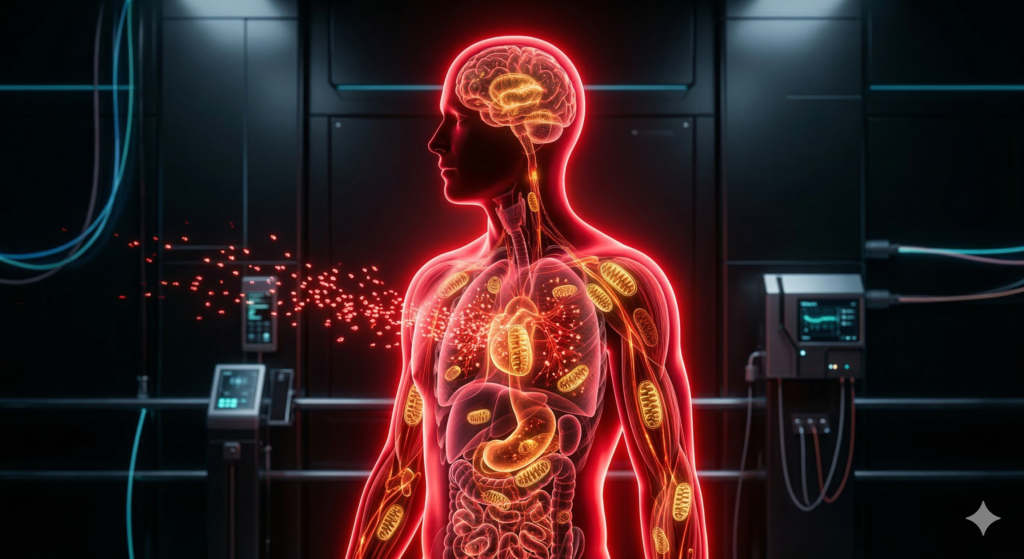
Humans are light-eaters. Just as plants use chlorophyll to convert sunlight into energy, human cells have a similar mechanism. For the Hacked Human, Red Light Therapy (RLT)—scientifically known as Photobiomodulation (PBM)—is a targeted way to feed our mitochondria the specific wavelengths they need to thrive.
In an era of “light malnutrition” caused by indoor environments and blue-light-emitting screens, RLT is a mandatory tool for anyone seeking peak biological resilience.
The Science: The Cytochrome C Oxidase Engine
Why red light? It’s all about the wavelength. RLT specifically utilizes red light (630–670nm) and near-infrared light (810–850nm) to penetrate deep into the tissue.
The Biological Mechanism: Inside your mitochondria, there is an enzyme called Cytochrome C Oxidase. During times of stress or aging, nitric oxide (NO) binds to this enzyme, halting ATP (energy) production. When photons of red light hit this enzyme, they kick the nitric oxide out and allow oxygen to bind. This restarts the “engine,” resulting in a massive increase in ATP (Adenosine Triphosphate) production.
The Triple-Threat Benefits
- Systemic Inflammation & Recovery: By increasing cellular energy, RLT accelerates tissue repair. Athletes use it to reduce muscle soreness (DOMS) and speed up wound healing.
- Skin Health & Collagen: Red light triggers fibroblasts to produce more Collagen and Elastin. It’s the only anti-aging tool that works from the inside out, reducing fine lines and improving skin tone without chemicals.
- Circadian Alignment: Using red light in the evening signals to the brain that the sun is setting, preventing the melatonin-disrupting effects of blue light.
The Protocol: How to Dosing Light
More is not always better with RLT. This is a classic case of Hormesis.
Consistency: 3–5 times per week is the “sweet spot” for mitochondrial maintenance.
Distance: Stay 6–12 inches away from the device for skin benefits, or closer for deep tissue/joint recovery.
Timing: 10–20 minutes per session. Overloading the cells with too much light can lead to a “diminishing returns” effect where the benefits are neutralized.