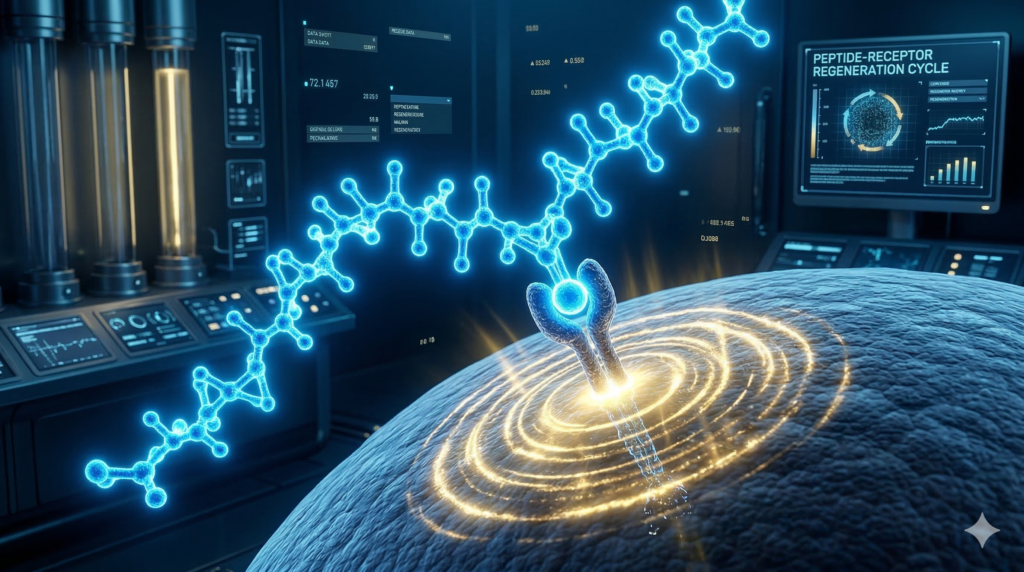
In the world of the Hacked Human, waiting weeks or months for an injury to heal is an outdated paradigm. We are now entering the era of Biomodulation, where we use short chains of amino acids—known as Peptides—to send precise instructions to our cells.
Peptides act as biological signaling molecules. They tell your body to “start building new blood vessels here” or “reduce inflammation in this specific tissue.” Here is what you need to know about the most researched peptides for repair.
1. BPC-157: The “Body Protection Compound”
BPC-157 is a peptide chain originally found in human gastric juice. It is the gold standard for gut and soft tissue repair.
The Biological Mechanism: BPC-157 works primarily through Angiogenesis—the creation of new blood vessels. By increasing blood flow to damaged areas (like tendons, ligaments, and the gut lining), it provides the oxygen and nutrients necessary for rapid regeneration.
- Target Areas: Gastric ulcers, leaky gut, tendonitis, and ligament tears.
- The Hack: Unlike many peptides, BPC-157 is stable enough to be taken orally for gut issues, though injectable forms are more effective for localized injuries.
2. TB-500 (Thymosin Beta-4): The Systematic Healer
If BPC-157 is a local sniper, TB-500 is the air force. It is a synthetic version of a naturally occurring protein that promotes cellular migration and healing across the entire body.
The Biological Mechanism: TB-500 binds to Actin, a protein that is critical for cell structure and movement. This allows healing cells to migrate faster to the site of an injury. It also has a profound effect on reducing systemic inflammation.
- Target Areas: Muscle tears, cardiovascular repair, and skin healing.
- The Synergy: Biohackers often stack BPC-157 and TB-500 together to attack the healing process from two different biological pathways.
3. The Ethical & Purity Standards
Because peptides are not “supplements” in the traditional sense, the source is everything.
- Purity Matters: Low-quality peptides can contain leftover solvents or bacterial endotoxins. Always look for Third-Party HPLC Testing and mass spectrometry reports.
- Storage: Peptides are delicate. Once reconstituted with bacteriostatic water, they must be kept refrigerated to maintain their molecular integrity.
IMPORTANT DISCLAIMER: This article is for informational purposes only. In many jurisdictions, BPC-157 and TB-500 are classified as “Research Chemicals” and are not approved for human consumption by the FDA or EMA. Furthermore, most peptides are currently banned by WADA (World Anti-Doping Agency) for competitive athletes. Never start a peptide protocol without consulting a physician specialized in regenerative medicine.