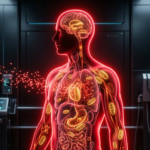
In a world designed to hijack our attention, the ADHD brain is often seen as “disordered.” However, in the Hacked Human framework, we view ADHD as a specific neuro-biological profile characterized by dopamine dysregulation.
The goal isn’t to “fix” a broken brain, but to optimize your environment and neurochemistry to leverage the ADHD “hyper-focus” while stabilizing executive function.
Phase 1: Managing the Dopamine Baseline
Most focus issues stem from a “cheap dopamine” loop—scrolling, notifications, and high-sugar foods. This spikes dopamine and then drops it below your baseline, leading to “ADHD paralysis.”
The Biological Mechanism: The ADHD brain often has a lower density of dopamine receptors or clears dopamine too quickly from the synapse. Stimulants work by forcing a massive release of dopamine. We can achieve a more sustainable version of this by raising the Tonic Dopamine Baseline.
- Cold Exposure: A 2-minute cold plunge can increase baseline dopamine by 250% for up to 4 hours.
- Dopamine Fasting: Limiting “super-normal stimuli” (social media) in the first 4 hours of the day to prevent receptor downregulation.
Phase 2: The Non-Stimulant Nootropic Stack
We use compounds that support Catecholamine production (Dopamine and Norepinephrine) without the “jittery” crash.
- L-Tyrosine: The direct amino acid precursor to dopamine. Taking 500mg-1g on an empty stomach provides the raw materials for focus.
- Mucuna Pruriens: Contains natural L-Dopa, which can cross the blood-brain barrier more effectively.
- Saffron Extract: Clinical studies suggest 30mg of saffron can be as effective as low-dose methylphenidate for some individuals in improving focus.
Phase 3: Glycemic Control & Brain Fuel
Fluctuations in blood sugar are the enemy of focus. An ADHD brain is hyper-sensitive to the “glucose roller coaster.”
The Biological Mechanism: When blood sugar crashes, the brain loses its primary energy source, triggering irritability and loss of executive function. By maintaining Metabolic Flexibility, we provide the brain with a steady stream of Ketones, which are a more stable fuel source for cognitive tasks.
- The Hack: Break your fast with a high-protein, high-fat meal. Avoid “naked carbs” in the morning.
Phase 4: Environmental “Hard-Wiring”
Your environment is your external prefrontal cortex.
The 20-Minute Sprint: The ADHD brain loves novelty. Use the Pomodoro technique, but shorten the sprints to 20 minutes to keep the “reward system” engaged.
Brown Noise & Binaural Beats: Listening to brown noise can help “mask” the internal chatter of an ADHD brain, allowing for deep work.